The eCommerce landscape has transformed dramatically over the past decade, but one challenge remains constant: getting products to customers quickly, efficiently, and cost-effectively. While traditional courier allocation methods rely on manual processes and basic algorithms, AI courier allocation is revolutionizing how online retailers manage their delivery operations.

Imagine running an eCommerce business where every delivery decision is optimized in real-time, where your courier assignments automatically adapt to traffic patterns, weather conditions, and customer preferences. This isn’t a futuristic dream—it’s happening right now through smart courier allocation systems powered by artificial intelligence.
In this comprehensive guide, we’ll explore why AI delivery optimization has become indispensable for modern eCommerce brands and how it’s reshaping the entire logistics landscape.
The Current State of eCommerce Delivery Challenges
Before diving into AI solutions, let’s understand the pain points that plague traditional eCommerce courier management. Most online retailers still struggle with outdated systems that can’t keep pace with modern consumer expectations.
Traditional courier allocation typically involves static rules and manual oversight. A human dispatcher might assign deliveries based on basic criteria like geographic proximity or courier availability. However, this approach fails to consider dozens of variables that could optimize the entire process.
Consider this scenario: It’s Black Friday, and your eCommerce platform receives thousands of orders within hours. Your current system assigns couriers based on simple proximity rules, but it doesn’t account for real-time traffic conditions, individual courier performance metrics, or the complexity of different delivery routes. The result? Delayed deliveries, frustrated customers, and increased operational costs.
This is where AI-powered logistics steps in to transform chaos into orchestrated efficiency. Modern courier allocation software leverages machine learning algorithms to process vast amounts of data and make split-second decisions that human dispatchers simply cannot match.
How AI Courier Allocation Works: The Technology Behind the Magic
Automated delivery assignment systems operate on sophisticated algorithms that analyze multiple data streams simultaneously. These systems don’t just look at basic information—they process everything from historical delivery patterns to real-time weather updates.
The core of AI logistics for eCommerce lies in its ability to learn and adapt. Machine learning models analyze past delivery performance, identifying patterns that humans might miss. For instance, the system might discover that certain couriers perform better in specific neighborhoods or during particular time windows.
Dynamic routing algorithms continuously optimize delivery paths based on current conditions. If there’s unexpected traffic on a major route, the AI instantly recalculates the most efficient alternatives. This real-time adaptability is what sets AI systems apart from traditional static routing methods.
The predictive analytics delivery component is particularly powerful. By analyzing historical data, weather patterns, and local events, AI can anticipate potential delivery challenges before they occur. This proactive approach allows eCommerce brands to adjust their strategies preemptively rather than reactively.
Key Benefits of AI Courier Allocation for eCommerce Brands
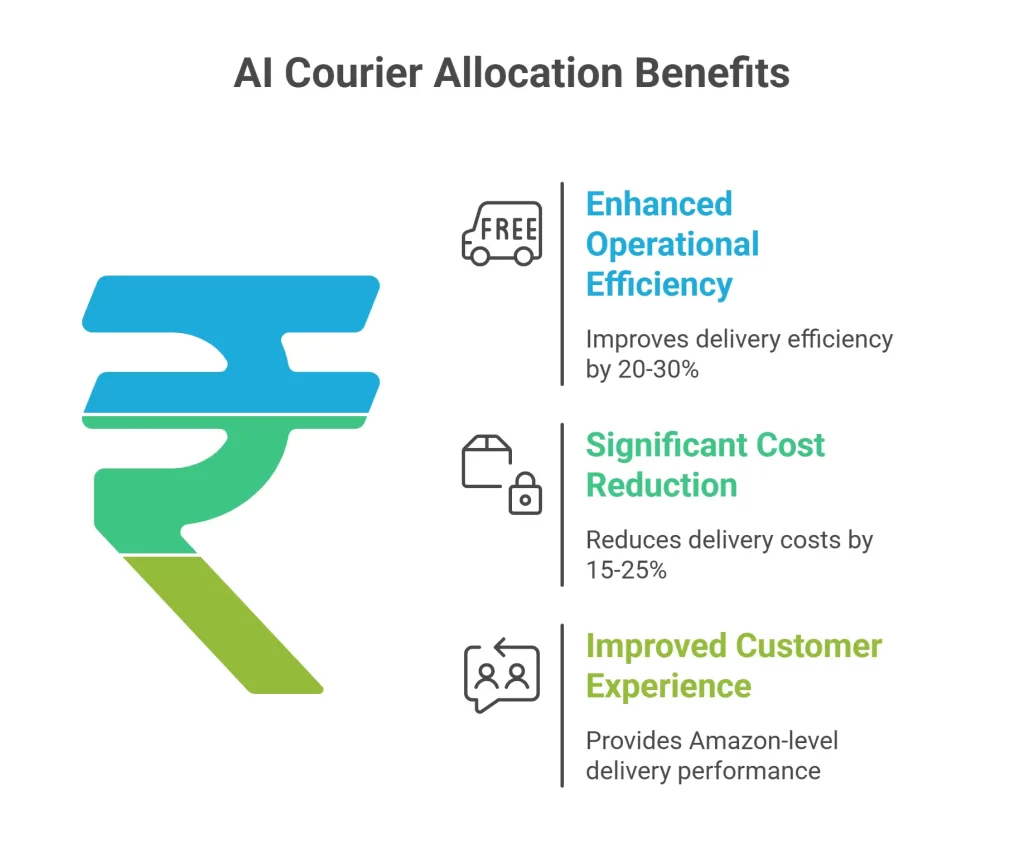
Enhanced Operational Efficiency
Smart logistics management delivers measurable improvements in operational efficiency. Studies show that eCommerce brands implementing AI courier allocation typically see 20-30% improvements in delivery efficiency within the first six months.
The system automatically handles complex scheduling decisions that would take human dispatchers hours to complete. Automated courier dispatch ensures that the right courier is assigned to the right delivery at the optimal time, considering factors like courier skills, vehicle capacity, and current workload.
Machine learning delivery systems also reduce the administrative burden on logistics teams. Instead of spending time on manual route planning and courier assignments, staff can focus on strategic initiatives and customer service improvements.
Significant Cost Reduction
One of the most compelling reasons for adopting AI delivery scheduling is the substantial shipping cost reduction it delivers. By optimizing routes and courier assignments, businesses typically see 15-25% reductions in delivery costs.
Last-mile delivery optimization is particularly impactful since this segment often represents 50-60% of total shipping costs. AI systems minimize unnecessary mileage, reduce fuel consumption, and maximize courier productivity through intelligent scheduling.
The order fulfillment efficiency improvements extend beyond direct cost savings. Faster, more reliable deliveries lead to increased customer satisfaction and repeat business, creating a positive feedback loop that drives long-term profitability.
Improved Customer Experience
Today’s consumers expect Amazon-level delivery performance from every eCommerce brand. AI courier allocation helps level the playing field by enabling smaller retailers to offer competitive delivery experiences.
Real-time tracking systems integrated with AI allocation provide customers with accurate delivery windows and proactive updates. When the system predicts a potential delay, it can automatically notify customers and offer alternatives, maintaining transparency and trust.
Customer satisfaction logistics metrics consistently improve when businesses implement AI-driven allocation systems. Customers receive their orders faster and more reliably, leading to higher satisfaction scores and increased brand loyalty.
Essential Features of Modern AI Courier Allocation Systems
Intelligent Route Optimization
Delivery route planning has evolved far beyond simple point-to-point navigation. Modern systems consider multiple variables including traffic patterns, delivery time windows, courier preferences, and package characteristics.
The best courier assignment algorithms can process thousands of variables simultaneously to determine the optimal allocation strategy. They consider factors like courier expertise (some may be better with fragile items), vehicle specifications, and even customer preferences for delivery times.
Fleet management software integration ensures that vehicle maintenance schedules, fuel levels, and capacity constraints are factored into allocation decisions. This holistic approach prevents bottlenecks and ensures smooth operations.
Real-Time Adaptability
Supply chain automation thrives on real-time data processing. Modern AI systems continuously monitor conditions and adjust allocations accordingly. If a courier encounters an unexpected delay, the system can automatically reassign remaining deliveries to maintain schedule integrity.
Delivery performance metrics are tracked in real-time, allowing the system to learn and improve continuously. Poor-performing routes are identified and optimized, while successful strategies are reinforced and replicated.
Predictive Analytics Capabilities
Logistics technology solutions now incorporate sophisticated forecasting models that predict demand patterns, potential disruptions, and optimal resource allocation. These insights enable proactive decision-making rather than reactive problem-solving.
Delivery time optimization relies heavily on predictive analytics to anticipate and prevent delays before they occur. The system might identify that certain areas typically experience traffic congestion during specific hours and adjust scheduling accordingly.
Implementation Strategies for eCommerce Brands
Assessing Your Current Operations
Before implementing eCommerce fulfillment automation, conduct a thorough analysis of your existing delivery operations. Identify pain points, measure current performance metrics, and establish baseline measurements for comparison.
Consider factors like average delivery times, cost per delivery, customer satisfaction scores, and courier utilization rates. This data will help you set realistic expectations and measure the success of your AI implementation.
Choosing the Right AI Platform
Not all AI delivery management platforms are created equal. Look for solutions that integrate seamlessly with your existing warehouse management systems and eCommerce platforms.
Key features to evaluate include scalability, customization options, integration capabilities, and ongoing support. The best platforms offer flexible APIs that can adapt to your specific business requirements.
Training and Change Management
Successful implementation requires comprehensive training for your logistics team. While AI handles much of the decision-making, human oversight remains crucial for handling exceptions and maintaining system performance.
Develop clear protocols for monitoring AI recommendations, handling system alerts, and intervening when manual adjustments are necessary. Your team should understand how the AI makes decisions so they can work effectively with the technology.
Measuring Success: Key Performance Indicators
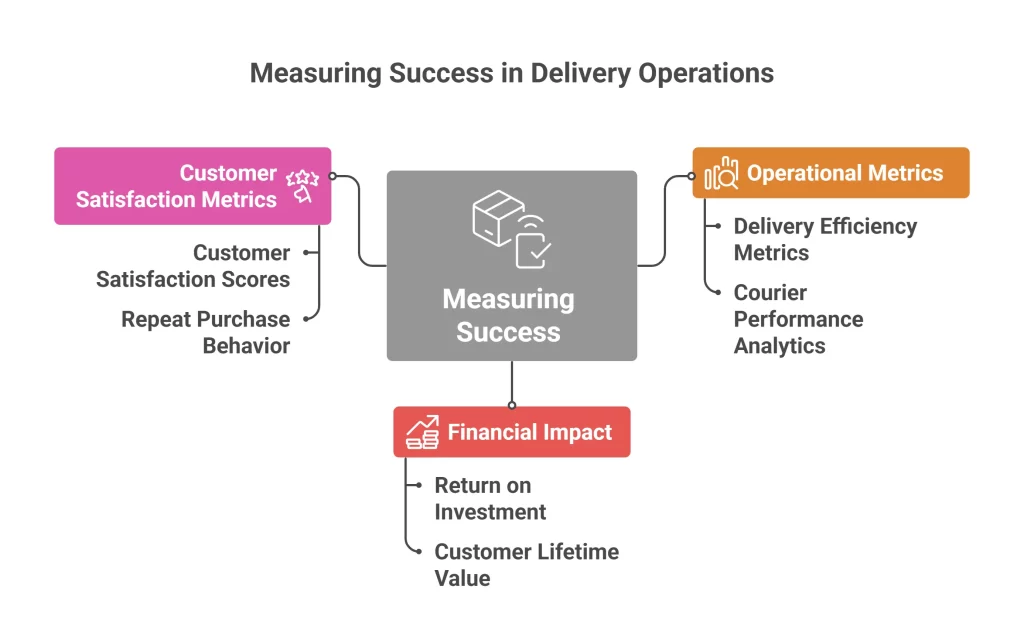
Operational Metrics
Track improvements in delivery efficiency metrics such as on-time delivery rates, average delivery times, and courier productivity. Most businesses see significant improvements within 3-6 months of implementation.
Monitor courier performance analytics to identify top performers and areas for improvement. AI systems provide detailed insights into individual courier performance, enabling targeted coaching and optimization.
Financial Impact
Calculate the return on investment by measuring cost savings from reduced fuel consumption, improved route efficiency, and decreased overtime expenses. Most eCommerce brands achieve positive ROI within 12-18 months.
Track customer lifetime value improvements resulting from enhanced delivery experiences. Satisfied customers tend to order more frequently and recommend your brand to others.
Customer Satisfaction Metrics
Monitor delivery-related customer satisfaction scores, complaint rates, and repeat purchase behavior. Customer delivery experience improvements often correlate directly with overall brand perception and loyalty.
Overcoming Common Implementation Challenges
Integration Complexity
Many eCommerce brands worry about the complexity of integrating AI systems with existing infrastructure. However, modern logistics technology solutions are designed with integration in mind.
Start with a pilot program focusing on a specific geographic area or product category. This approach allows you to test the system, refine processes, and demonstrate value before full-scale implementation.
Data Quality Concerns
AI systems require high-quality data to function effectively. Invest time in cleaning and organizing your historical delivery data before implementation. Poor data quality will limit the system’s ability to make optimal decisions.
Work with your AI vendor to establish data quality standards and monitoring processes. Regular data audits ensure that the system continues to receive accurate information for decision-making.
Staff Resistance
Some team members may resist AI implementation due to concerns about job security or changes to established workflows. Address these concerns through transparent communication and comprehensive training.
Emphasize that AI enhances human capabilities rather than replacing them. Show how the technology eliminates tedious manual tasks, allowing staff to focus on more strategic and fulfilling work.
Future Trends in AI Courier Allocation
Advanced Machine Learning Models
Next-generation machine learning delivery systems will incorporate more sophisticated algorithms capable of processing unstructured data like social media sentiment, local event information, and economic indicators.
These advanced models will provide even more accurate predictions and optimizations, further improving delivery performance and cost efficiency.
IoT Integration
The Internet of Things (IoT) will play an increasingly important role in smart delivery technology trends. Connected vehicles, smart packaging, and environmental sensors will provide real-time data streams that enhance AI decision-making.
This integration will enable more precise tracking, proactive maintenance scheduling, and dynamic route adjustments based on real-time conditions.
Sustainability Focus
Environmental considerations are becoming increasingly important in logistics decisions. Future AI systems will optimize not just for cost and speed but also for carbon footprint reduction and sustainability metrics.
Green logistics algorithms will balance delivery efficiency with environmental impact, helping eCommerce brands meet sustainability goals while maintaining operational excellence.
Conclusion
The evidence is clear: AI courier allocation is no longer a luxury for eCommerce brands—it’s a necessity for staying competitive in today’s market. As customer expectations continue to rise and operational costs increase, businesses that fail to adopt intelligent delivery optimization will find themselves at a significant disadvantage.
The transformation from traditional courier management to AI-powered logistics represents more than just a technology upgrade. It’s a fundamental shift toward data-driven decision-making that delivers tangible benefits: reduced costs, improved efficiency, and enhanced customer satisfaction.
The question isn’t whether your eCommerce brand should implement smart courier allocation—it’s how quickly you can make the transition. Every day you delay adoption is another day your competitors gain ground in delivery performance and cost efficiency.
Ready to revolutionize your delivery operations? Start exploring AI courier allocation solutions today. Begin with a comprehensive audit of your current logistics processes, identify key pain points, and research platforms that align with your business needs. The future of eCommerce delivery is intelligent, automated, and optimized—and that future is available right now.
Don’t let outdated delivery management hold your eCommerce brand back. Embrace AI courier allocation and transform your logistics operations into a competitive advantage that drives customer loyalty and business growth.
Frequently Asked Questions
AI courier allocation is an automated system that uses artificial intelligence and machine learning algorithms to assign delivery tasks to couriers. It analyzes multiple data points including courier location, capacity, skills, traffic conditions, delivery urgency, and customer preferences to make optimal assignment decisions in real-time. The system continuously learns from past performance to improve future allocations.
Most eCommerce brands see cost reductions of 15-25% in their delivery operations after implementing AI courier allocation systems. These savings come from optimized routes, reduced fuel consumption, improved courier productivity, and decreased failed delivery attempts. The exact savings depend on current operational efficiency, delivery volume, and geographic coverage.
AI courier allocation systems require various data inputs including historical delivery data, courier performance metrics, real-time location information, traffic and weather conditions, customer delivery preferences, package characteristics (size, weight, fragility), and delivery time windows. The more comprehensive and accurate the data, the better the system’s optimization capabilities.
AI courier allocation enhances customer satisfaction by providing faster, more reliable deliveries with accurate time estimates. The system optimizes routes to minimize delivery times, reduces failed delivery attempts through better scheduling, provides real-time tracking updates, and can proactively notify customers of any delays or changes. This transparency and reliability significantly improve the overall customer delivery experience.
Key features to evaluate include seamless integration with existing systems (eCommerce platforms, warehouse management, tracking systems), real-time optimization capabilities, scalability to handle growth, customizable algorithms for specific business needs, comprehensive analytics, mobile apps for couriers, API availability for custom integrations, and reliable customer support. The platform should also offer flexible pricing models and proven ROI metrics. Additionally, consider solutions that offer NDR management capabilities to handle failed delivery attempts effectively, pre-shipping optimization features, and comprehensive manifestation tools for streamlined operations.”