Imagine you’re running an eCommerce brand that ships 10,000 orders a month. You’ve outgrown spreadsheets. Your carrier contracts are a mess. And every time a customer asks “where’s my order?”, your team scrambles across three different dashboards to find an answer.
Sound familiar?
The logistics aggregator vs SaaS platform debate is one that every growing business eventually faces. On one side, there’s the logistics aggregator platform that bundles carriers, rates, and services into one plug-and-play interface. On the other side, there’s the SaaS intelligence layer, a cloud-native logistics solution that sits on top of your existing systems and turns raw data into actionable insights.
Both promise to simplify your supply chain. Both claim to save you money. But they work in fundamentally different ways, and choosing the wrong one can cost you months of wasted implementation time and thousands in sunk costs.
This logistics technology platform guide breaks down the differences, the strengths, and the real-world trade-offs between these two models. By the end, you’ll know exactly which path makes sense for your business. Let’s dig in.
What Is a Logistics Aggregator?
A logistics aggregator is a platform that consolidates multiple carriers, shipping services, and fulfillment options into a single interface. Think of it as a travel booking site, but for shipping. Instead of negotiating individual contracts with FedEx, DHL, a regional courier, and a last-mile delivery provider, you access all of them through one logistics aggregator software dashboard.
The core value proposition is simplicity. You get:
- Multi-carrier shipping aggregator access with pre-negotiated rates
- A unified shipment tracking integration across all carriers
- Automated label generation and order fulfillment
- Basic freight rate comparison tools
- Standardized returns and reverse logistics management
Popular eCommerce logistics aggregator platforms handle everything from carrier selection to last-mile delivery optimization. They’re especially attractive for small and mid-sized businesses that don’t have the volume or leverage to negotiate carrier contracts on their own.
However, here’s the thing most people miss. A logistics aggregator is primarily an execution layer. It helps you do logistics. It doesn’t necessarily help you think about logistics differently.
What Is a SaaS Intelligence Layer in Logistics?
A SaaS intelligence layer logistics platform takes a completely different approach. Rather than replacing your existing logistics stack, it sits on top of it. It connects to your transportation management system (TMS), your warehouse management system (WMS), your carrier APIs, and your order management tools through an API-first architecture.
Then it does something an aggregator typically can’t: it analyzes, predicts, and recommends.
A supply chain intelligence platform in this category provides:
- Real-time analytics dashboards that unify data from every logistics touchpoint
- Predictive logistics analytics powered by machine learning supply chain models
- Carrier performance scoring and dynamic routing recommendations
- Cost optimization modeling based on historical shipment data
- Supply chain visibility across your entire network, not just the shipping leg
Think of the SaaS intelligence layer as the brain, while the aggregator is more like the hands. The intelligence layer doesn’t move your packages. It tells you the smartest way to move them.
This model appeals to mid-market and enterprise logistics teams that already have carrier relationships and operational infrastructure in place. They don’t need another shipping tool. They need a data orchestration layer that makes their existing tools smarter.
Platforms like Metaport represent this new wave of intelligence-first logistics technology, offering brands the ability to layer smart decision-making on top of their existing carrier network.
Logistics Aggregator vs SaaS Platform: A Side-by-Side Comparison
Let’s get specific. Here’s how these two models stack up across the dimensions that matter most when making a logistics SaaS platform comparison.
Scope of Functionality
Aggregators focus on execution: booking shipments, printing labels, tracking packages, and comparing rates. They’re built to consolidate and simplify.
SaaS intelligence platforms focus on optimization: analyzing patterns, forecasting demand, identifying cost leaks, and recommending carrier strategies. They’re built to inform decisions.
Integration Architecture
Aggregators typically require you to route your shipping workflow through their platform. Your orders flow into the aggregator, and the aggregator communicates with carriers. This creates a logistics middleware platform model where the aggregator becomes a critical dependency.
SaaS intelligence layers use a different approach. They connect via APIs and webhooks to your existing systems without replacing them. This headless logistics platform architecture means you maintain direct carrier relationships while gaining a unified intelligence view. Many intelligence platforms offer extensive integration ecosystems that connect with your existing eCommerce platforms, ERPs, and carrier systems.
Data Ownership and Insights
This is where the gap widens significantly. Most logistics aggregator platforms give you basic reporting: shipment volumes, delivery times, cost per shipment. Useful, but surface-level.
A logistics data intelligence platform goes much deeper. It can run ETL pipeline logistics data processes to combine shipping data with inventory levels, customer behavior, seasonal trends, and carrier SLA performance. The result is predictive logistics analytics that tells you what’s likely to happen next week, not just what happened last week.
Scalability
For a growing D2C brand shipping a few thousand orders a month, an aggregator scales beautifully. The pre-negotiated rates improve as your volume grows, and you don’t need a logistics team to manage it.
But at enterprise scale, aggregators can become bottlenecks. When you’re managing multi-channel fulfillment software across warehouses in different regions, working with dozens of carriers, and handling both B2B and B2C flows, you need the logistics platform interoperability that an intelligence layer provides.
Total Cost of Ownership (TCO)
Aggregators usually charge per shipment or take a margin on carrier rates. The pricing is transparent and easy to model. For small businesses, this keeps costs predictable.
SaaS intelligence platforms typically charge subscription fees based on data volume, number of integrations, or shipment count. The upfront cost is often higher, but the ROI logistics software delivers comes from optimization savings: better carrier selection, fewer failed deliveries, reduced transit times, and smarter inventory placement.
The Pros and Cons You Need to Know
Logistics Aggregator Benefits
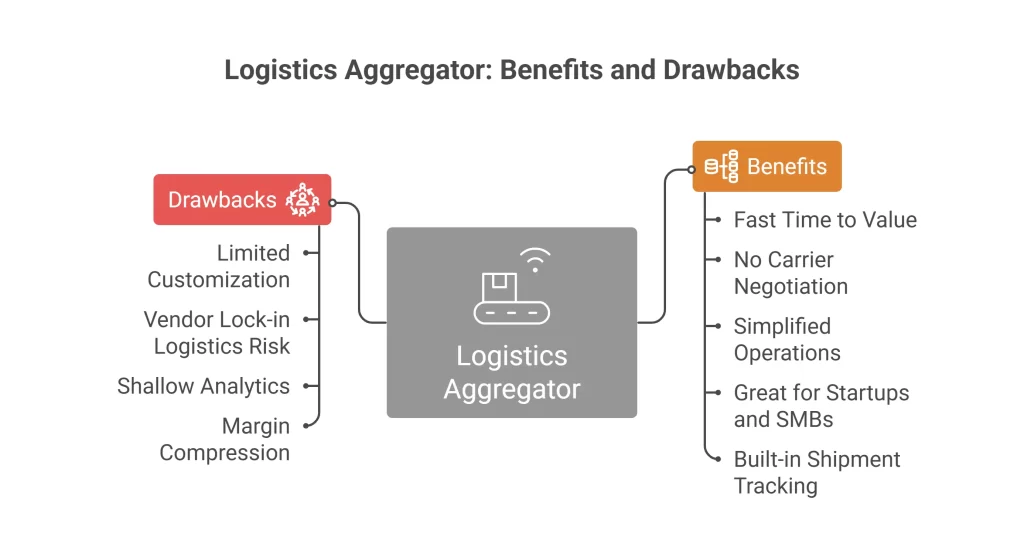
- Fast time to value. Most aggregators can be set up in days, not months.
- No carrier negotiation required. You get access to pre-negotiated rates immediately.
- Simplified operations. One dashboard, one integration, multiple carriers.
- Great for startups and SMBs. Low barrier to entry with pay-as-you-go pricing.
- Built-in shipment tracking integration that customers can access directly.
Logistics Aggregator Drawbacks
- Limited customization. You’re working within the aggregator’s carrier network and rules.
- Vendor lock-in logistics risk. Your shipping data lives on their platform, making migration painful.
- Shallow analytics. Reporting is transactional, not strategic.
- Margin compression. As you scale, the aggregator’s margin on rates can exceed what you’d pay with direct carrier contracts.
SaaS Intelligence Layer Benefits
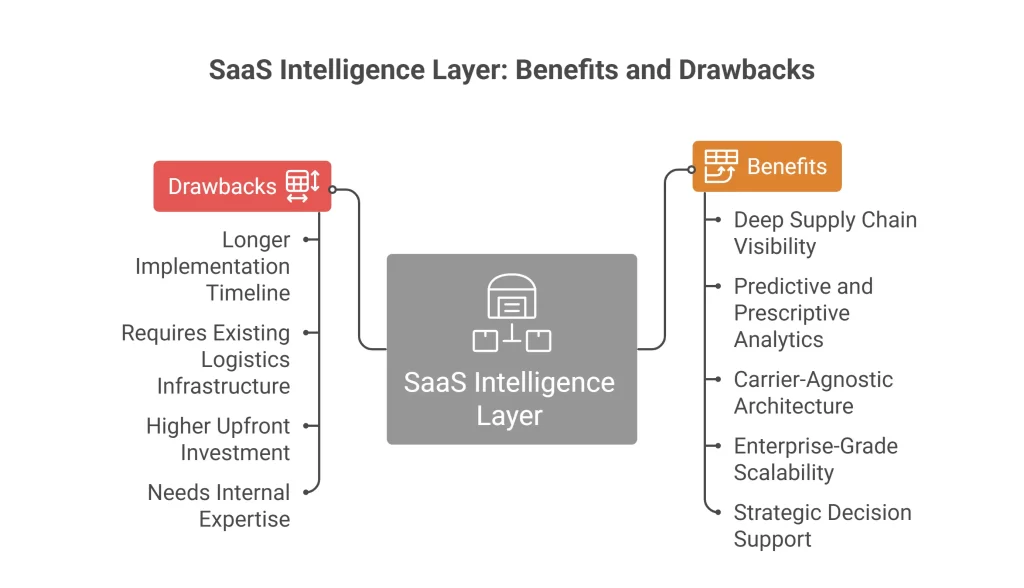
- Deep supply chain visibility across all logistics partners and systems.
- Predictive and prescriptive analytics powered by machine learning.
- Carrier-agnostic architecture. You keep your existing relationships and add intelligence on top. Some platforms even support a Bring Your Own Carrier (BYOC) model.
- Enterprise-grade scalability with multi-tenant SaaS architecture.
- Strategic decision support for network design, carrier mix optimization, and demand forecasting.
SaaS Intelligence Layer Drawbacks
- Longer implementation timeline. Integrating with multiple systems takes weeks or months.
- Requires existing logistics infrastructure. This isn’t a plug-and-play shipping solution.
- Higher upfront investment. Subscription costs and integration work add up.
- Needs internal expertise. Your team must be able to act on the insights the platform provides.
The Hidden Battleground: NDR, RTO, and Post-Shipping Intelligence
Here’s something that rarely comes up in the logistics aggregator vs SaaS platform conversation, but it should: what happens after the package ships?
Aggregators typically hand off responsibility once the label is generated and the carrier picks up the package. If a delivery fails, you get a notification. Maybe. If the customer initiates a return, you process it manually.
A SaaS intelligence layer, on the other hand, treats post-shipping as a goldmine of optimization opportunity. Understanding what NDR (Non-Delivery Report) and RTO (Return to Origin) mean and how to manage them proactively can save eCommerce brands thousands of rupees every month.
Intelligence platforms offer:
- Automated NDR management with smart escalation workflows
- Proactive customer engagement through WhatsApp, SMS, and email to resolve delivery issues before they become RTOs
- Estimated delivery date prediction that sets accurate customer expectations upfront
- RTO reduction analytics that identify patterns in failed deliveries by pin code, carrier, or product category
This post-shipping intelligence is where the SaaS model truly separates itself from the aggregator approach. It’s not just about shipping the package. It’s about ensuring it actually reaches the customer.
The Role of AI in Smart Carrier Allocation
One of the most impactful capabilities that a SaaS intelligence layer brings to the table is AI-powered courier allocation. Instead of relying on static rules like “use Carrier A for Zone B,” an intelligence platform dynamically selects the best carrier for each shipment based on dozens of real-time variables.
These variables include:
- Historical carrier performance by pin code and region
- Current carrier capacity and SLA adherence
- Package weight, dimensions, and value
- Customer delivery preferences
- Cost optimization targets
This is fundamentally different from how aggregators handle carrier selection. Most aggregators let you set basic rules or sort by cheapest rate. An intelligence layer uses machine learning to make the decision for you, and it gets smarter with every shipment.
For brands shipping at scale, this smart dispatch and allocation capability alone can reduce shipping costs by 10-15% while simultaneously improving delivery success rates.
Can You Use Both Together?
Here’s a question that doesn’t get asked enough: can you use a logistics aggregator and a SaaS intelligence layer together?
The answer is absolutely yes, and for many businesses, this hybrid approach is the sweet spot.
Picture this setup: you use an eCommerce logistics aggregator to handle day-to-day shipping execution. Orders flow in, labels get printed, packages get tracked. At the same time, a SaaS intelligence layer connects to the aggregator’s data (along with your WMS, OMS, and customer platform) and provides the strategic oversight.
The intelligence layer might tell you that Carrier A consistently delivers two days late in the Midwest, or that your Tuesday shipments cost 15% more than Thursday shipments due to surge pricing patterns. You then use those insights to adjust your rules within the aggregator.
This model gives you the operational efficiency of an aggregator with the strategic depth of an intelligence platform. It’s particularly effective for businesses in that tricky middle zone: too big for a basic aggregator alone, but not ready to build a fully custom logistics tech stack.
How to Choose: A Decision Framework
Still not sure which model fits? Walk through these questions:
1. What’s your current shipping volume? Under 5,000 shipments per month? An aggregator is likely sufficient. Over 20,000? You should seriously evaluate an intelligence layer, either standalone or as a complement.
2. Do you have existing carrier contracts? If yes, an intelligence layer lets you keep those relationships while adding optimization. If no, an aggregator gives you instant access to competitive rates.
3. How complex is your logistics network? Single warehouse, domestic shipping? Aggregator. Multiple fulfillment centers, international shipping, cross-docking logistics, and mixed B2B/B2C? You need the visibility an intelligence layer provides.
4. What’s your build vs buy logistics technology philosophy? If you want to move fast with minimal engineering resources, aggregators win. If you’re investing in a long-term digital transformation supply chain strategy, an intelligence layer aligns better.
5. How important is data ownership? If you want full control over your logistics data for custom analytics, machine learning models, or competitive advantage, choose a platform with open APIs and data export capabilities. Many SaaS logistics platforms prioritize this. Many aggregators don’t.
6. How critical is pre-shipping intelligence to your operations? If you need address verification, serviceability checks, and order validation before a shipment even enters the carrier network, an intelligence layer provides this proactive layer that most aggregators skip entirely.
What the Future Looks Like
The logistics technology landscape is converging. By late 2026, the line between aggregators and intelligence platforms will blur further. We’re already seeing logistics aggregator platforms add predictive analytics features, while SaaS intelligence platforms are starting to offer execution capabilities like automated carrier booking.
AI is accelerating this convergence. Machine learning supply chain models are becoming commoditized, which means even mid-market platforms can offer route optimization software, demand forecasting, and dynamic carrier selection.
The real differentiator going forward won’t be whether a platform aggregates or analyzes. It will be how well it integrates into your unique logistics ecosystem and how quickly it adapts as your business evolves.
Cloud-native logistics architectures, composable microservices, and API-first design principles are making it possible to assemble a logistics tech stack that’s both powerful and flexible. The winners will be the businesses that stop thinking in terms of “aggregator or intelligence layer” and start thinking in terms of “what combination of capabilities do I need right now, and what will I need in 18 months?”
Wrapping It Up
The logistics aggregator vs SaaS platform decision isn’t about picking the “better” option. It’s about matching the right tool to your current reality and your growth trajectory.
If you need to get shipping up and running quickly with minimal complexity, a logistics aggregator gives you immediate value. If you’re sitting on a mountain of logistics data and need to turn it into smarter decisions, a supply chain intelligence platform is the move. And if you’re somewhere in between, the hybrid approach of combining an aggregator with a SaaS intelligence layer might be your best bet.
The most important step? Start by auditing what you have today. Map your current logistics tech stack, identify the gaps, and define what “better” actually looks like for your business. Once you understand your needs clearly, the logistics aggregator vs SaaS platform choice becomes much simpler.
Ready to make your logistics smarter? Explore how Metaport’s intelligence layer can help you optimize your supply chain, reduce costs, and deliver a better customer experience. The technology is here. The only question is whether you’re ready to use it.
Frequently Asked Questions
A logistics aggregator consolidates multiple carriers into one interface for shipping execution like label generation, rate comparison, and tracking. A SaaS intelligence layer focuses on data analysis, predictive analytics, and strategic optimization, making your shipping smarter through AI-powered courier allocation and proactive NDR management.
Most SaaS intelligence platforms use an API-first architecture to connect with your TMS, WMS, and carrier systems without replacing them. This creates a unified data layer that provides complete supply chain visibility. Platforms like Metaport offer extensive integrations with popular eCommerce platforms, ERPs, and carriers out of the box.
Cloud-based logistics platforms are making intelligence capabilities increasingly accessible for smaller businesses. However, if you’re shipping under 5,000 orders monthly with a simple setup, a multi-carrier shipping aggregator will likely deliver better short-term ROI. Reassess as your volume and logistics complexity grow.
AI powers critical functions like smart carrier allocation, demand forecasting, route optimization, and anomaly detection for shipment delays. It also enables estimated delivery date prediction and automated NDR resolution workflows that significantly reduce RTO rates.
Look beyond the sticker price. For aggregators, factor in per-shipment fees, rate margins, and vendor lock-in risks. For SaaS platforms, consider subscription costs, integration effort, and time to value. Weigh those against measurable benefits like reduced shipping spend, fewer failed deliveries through proactive customer engagement, and improved carrier performance.